

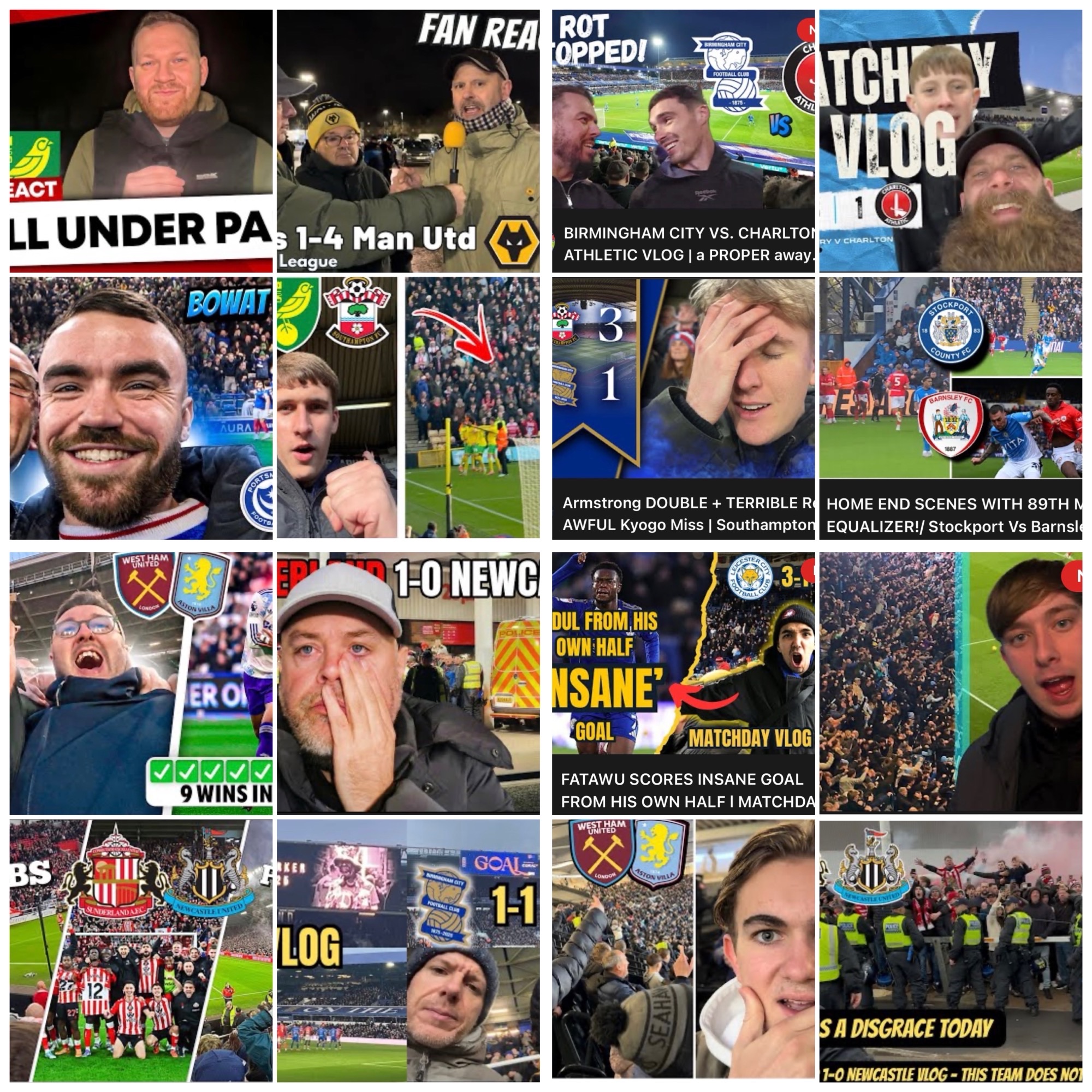
For decades, the matchday experience was shaped by broadcast television. Fixed camera angles, commentary teams and studio-led analysis told the story of a game, but rarely the story of being there. Today, that gap is increasingly filled by matchday vloggers, whose on-location content has become an essential part of how supporters experience football.
Filmed from turnstiles, concourses and stands, matchday vlogs capture football as it feels rather than how it is formally presented. For many fans, these creator-led perspectives now offer a truer reflection of matchday than traditional television coverage.
Why television struggles to capture the feeling of being there
Modern football broadcasting is technically polished but structurally constrained. Coverage is shaped by broadcast rights, production schedules and the need to appeal to neutral audiences. Cameras are positioned for clarity, not immersion. Crowd noise is managed, commentary is controlled and the emotional context of the stands is often secondary.
Asa result, much of what defines matchday for supporters never reaches the screen. The build-up outside the ground, the tension in the concourse, the humour, frustration and collective emotion of the crowd are filtered out. What remains is the match, but not the experience.
Matchday vloggers operate outside these constraints. They film what broadcasters cannot or will not, documenting football from the perspective of those living it in real time.
The supporter’s viewpoint as the main event
The defining strength of matchday vlogging is perspective. The camera sits among supporters rather than above them. Viewers see the game through the eyes of someone who has travelled, queued, sung and reacted alongside thousands of others.
Creators such as Villa on Tour, Alex Craig, Tommy Kelsall and club-specific channels like All Leeds TV or Always Wolves Fan TV consistently film on location. Their content captures travel to games, stadium surroundings, crowd reaction and post-match emotion, placing the viewer inside the matchday rather than observing it from a distance.
This shared supporter identity matters. Fans watching at home recognise their own experiences in what they see on screen. The content feels familiar, emotional and credible because it comes from people who attend matches week in, week out.
Atmosphere over analysis
Unlike traditional coverage, matchday vlogs are not driven by tactical breakdowns or pundit debate. Their value lies in atmosphere. Chanting, groans at missed chances, celebrations and collective frustration all become part of the narrative.
Channels such as The Away Fans or Football Away Days place particular emphasis on supporter culture, away travel and stadium environments, often documenting clubs across different leagues and countries. This broadens the football conversation beyond elite-level analysis and places importance on the rituals and traditions that define the sport at every level.
For many fans, this kind of content feels closer to the truth of football than any highlights package.
Immediacy in a mobile-first world
Matchday vlogs also reflect how modern audiences consume content. Filmed and published quickly, they allow supporters to relive or share the experience almost immediately. Clips circulate across YouTube, Instagram, TikTok and other platforms within hours of the final whistle.
For fans unable to attend games, whether due to geography or cost, these videos offer a way to remain connected. For international supporters in particular, matchday vlogs provide a sense of presence that television alone cannot deliver.
A complete matchday story
Another key difference is scope. Matchday vlogs rarely focus solely on the 90 minutes. They document the full arc of the day, from travel and pre-match anticipation to post-match reflection. This mirrors how supporters actually remember football.
The result is a layered narrative that feels personal rather than packaged. Football becomes a lived experience rather than a broadcast product.
What this means for the future of football media
The rise of matchday vlogging reflects a wider shift in football media. Supporters increasingly seek content that feels authentic, emotional and rooted in real experience. They gravitate toward voices that share their perspective rather than speak at them.
“This is where Bootroom’s role becomes increasingly relevant. As creator-led matchday content continues to grow, discoverability, quality and sustainability become critical. Bootroom exists to curate and support this ecosystem, helping fans find genuine matchday storytelling while providing creators, clubs and brands with a structure that respects authenticity.”
Matchday vlogging is no longer a niche format. It has become a central part of how modern supporters experience football. As the media landscape continues to evolve, the most compelling matchday stories will come not from studios, but from the stands.